Researcher | Writer | Teacher
I am a scholar of race, technology, and labor. My interdisciplinary research investigates the social, spatial and technological transformations of work in the 21st century. Using participatory action research methods, I demonstrate how algorithmic technologies produce and exploit sociospatial inequities and racial biases in immigrant workers’ lives. I am a PhD candidate in Geography at the University of Wisconsin-Madison.
—Research—
Worldbuilding in the Digital Economy: Immigrant Workers’ Struggles Against Platform Power and AI in New York City
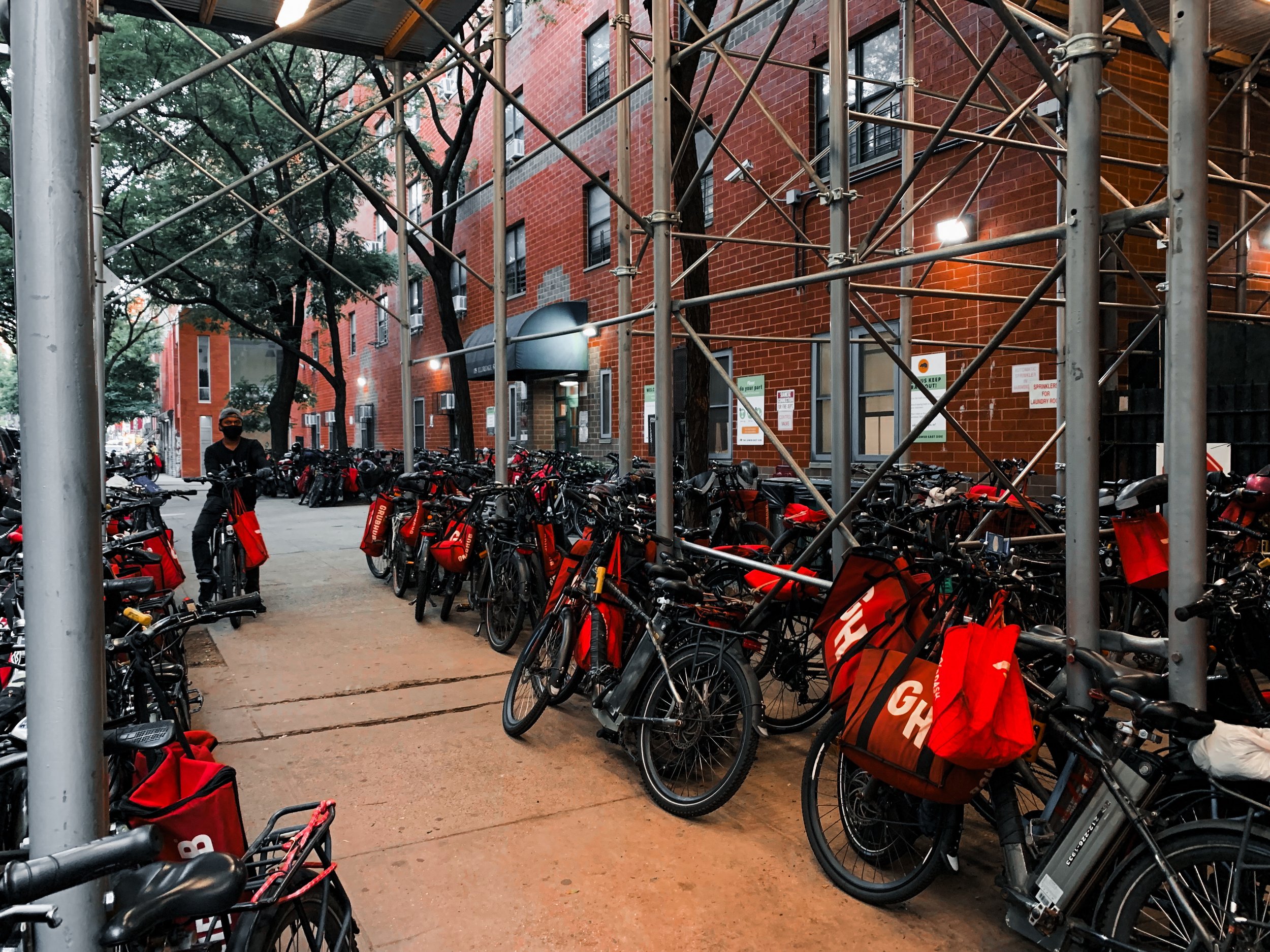
My dissertation project investigates everyday artificial intelligence technologies as contested worldbuilding projects that organize working lives in the city. In New York City, thousands of immigrant food delivery workers work on platforms like UberEats, Grubhub, and Doordash that use complex machine learning algorithms to estimate times of arrival, calculate prices and wages, and rank workers according to performance. While these dynamic algorithms seek to maximize profit on behalf of the platforms, I analyze how immigrant workers navigate AI’s externalities—the uneven production and distribution of risk, exploitation, and premature death across the city. To do so, from 2022 to 2025, I codesigned a participatory action research project with immigrant food delivery workers and conducted over 70 interviews that documented how food delivery workers are contesting algorithmic technologies by organizing for better wages and lives rooted in solidarity, care, and community.
This project makes two key interventions. First, it analyzes how contestations between workers and platforms shape urban planning and policy. For instance, successful efforts for just-cause employment protections and e-bike charging stations for platform delivery workers demonstrate how worker-led social movements challenge platform deregulation and increased precarity in the informal economy by making urban landscapes more livable. Second, this project rethinks AI governance and the spatial politics of technology by centering the workers who are often excluded from decision-making processes about AI. Worldbuilding in the Digital Economy demonstrates how these technologies intensify sociospatial inequities and racial biases by concentrating austerity and policing in workers’ lives.
—Writing—
Peer-reviewed journal articles

Promotional poster for the film Take Out (2004, dir. Sean Baker)
“Racial melancholia as praxis: Refusal and collective life beyond the model minority formation,” cultural geographies (2025)
This article contributes to debates about the racial politics of inclusion and limits of recognition by engaging literature about racial capitalism, carceral geography, and negative geographies. Turning to cases of everday anti-Asian violence experienced by delivery workers, it argues that the expansion of carceral geographies cannot be understood without the context of Asian racialization in the US.
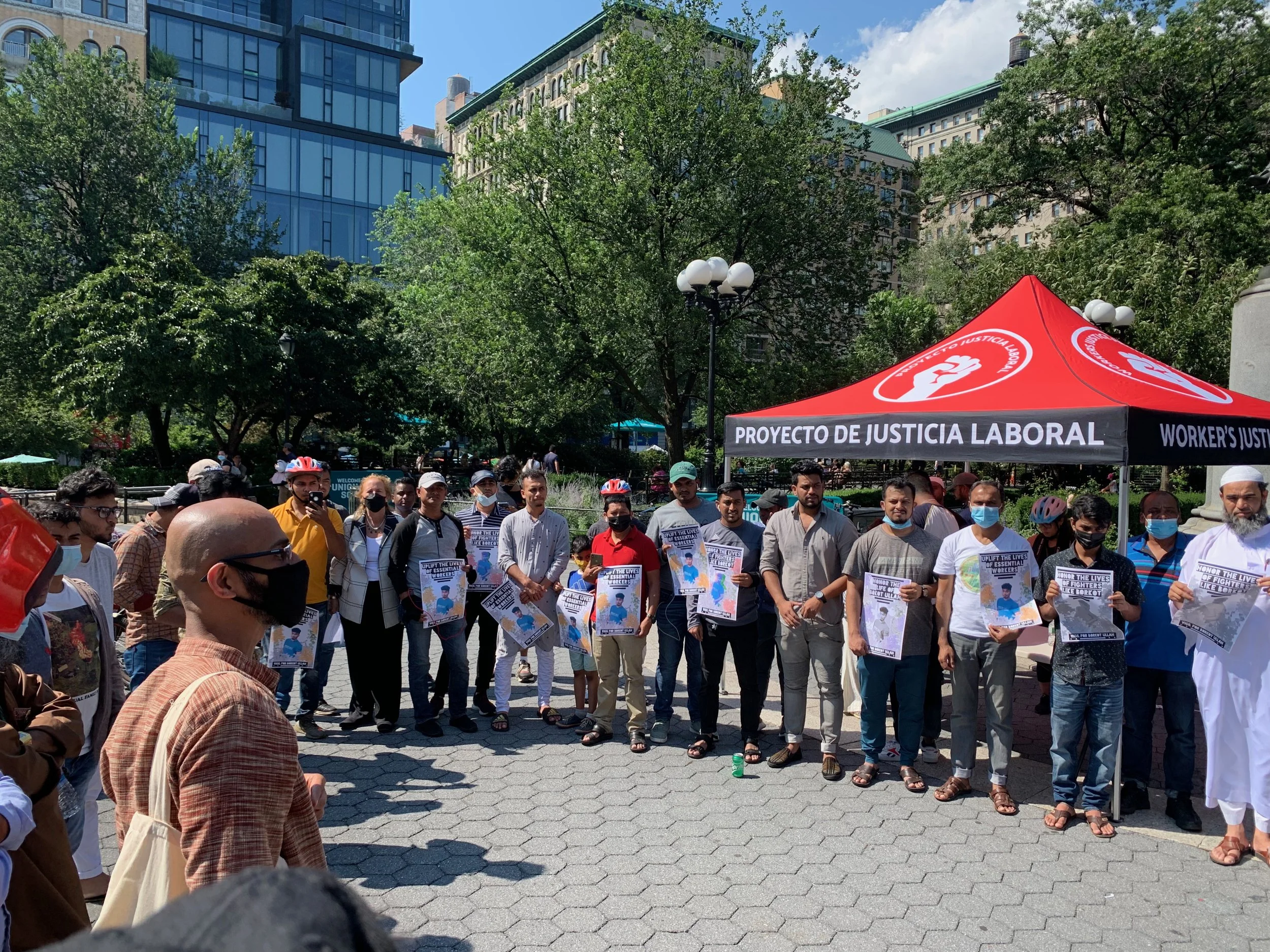
Bike registration event and memorial for a delivery worker killed while working (July 2021)
“The Carceral Geographies of Platform-Based Delivery Work: Essential Work and Bike Registrations in New York City,” Antipode (2024)
This paper demonstrates how platforms and police co-produce carceral geographies that manage and exploit immigrant delivery workers as surplus populations. Focusing on South Asian delivery workers in New York City, it uses the example of bike registrations to show how police and platforms expand carceral spaces in immigrant communities, increasing their vulnerability to premature death and violence.
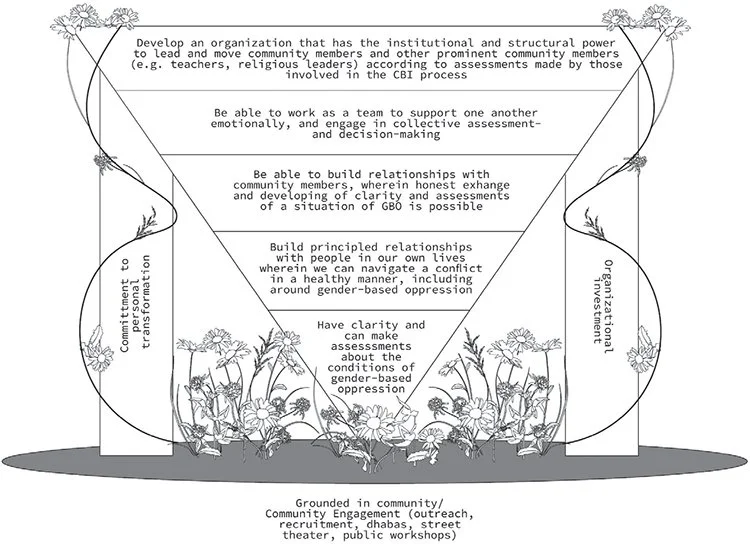
Necessary components to practice community based interventions to gender-based violence (illustrated by Akash Singh)
“Under Attack from the State and in Our Homes: Materialist Interventions and Lessons in Abolition Feminisms from Desis Rising Up & Moving,” with Jensine Raihan and Akash Singh, Frontiers: A Journal of Women’s Studies (2024)
This paper considers working-class abolitionist feminist conceptualizations of safety. Taking seriously the notion that “freedom is a place,” it looks at how working-class South Asians and Indo Caribbeans in New York City build livable worlds at the intersecting crises of capitalism, white supremacy, and patriarchy.
Other Writing
“No Data Centers in Anyone’s Backyard,” with Inayat Sabhikhi, Tech Policy Press (2026)
This op-ed considers how activists in the Global North might build an international movement of organizers and policymakers against data center expansion. It highlights how governments in the Global South are welcoming AI infrastructure with little regard for community impacts or environmental assessments, and while silencing opposition to these developments.
“Rising Waters from New York City to Pakistan: Abolitionist Organizing at the Intersection of Immigration Justice and the Climate Crisis,” with Akash Singh. Book chapter in Border. Abolition. Now. (2024)
This book chapter asks three interrelated questions: how does the U.S. border facilitate extra vulnerability to the climate crisis and environmental injustice? What do the experiences of working class immigrants tell us about the transnational components of border-induced climate change vulnerability? How might we reframe organizing in NYC for a robust social safety net and life affirming institutions in the context of the climate crisis?
—Collaborations—
I am committed to collaborative research at the intersection of labor movements and technology justice. I have worked with community organizations and workers in New York City and Madison, WI to design research projects, guide civic engagement, and document public histories about police violence, platform politics, and the impacts of AI infrastructures on everyday life.

Photo collage documenting a protest in 2002 that launched DRUM’s “Stop the Disappearances” campaign
Desis Rising Up and Moving (DRUM)
Desis Rising Up and Moving (DRUM) is a multigenerational, membership led organization of low-wage South Asian and Indo-Caribbean immigrants, workers and youth in New York City. My collaboration with DRUM began in 2021 as part of my masters research about post-9/11 policing and immigrant organizing in New York City. I helped document DRUM’s organizing efforts during the War on Terror as part of the public history project: Stop the Disappearances! Organizing for Freedom in the Wake of Post-9/11 Violence.
My current project utilizes the “Workers’ Inquiry,” a model of participatory action research that collaboratively designs surveys, interviews, and focus groups with immigrant delivery workers and members of DRUM to analyze the rapidly changing terrain of AI-powered platforms in the city. The data gathered during the Workers’ Inquiry about algorithmic management, work intensification, and solidarity guides both my research and workers’ civic engagement and activism in New York City.
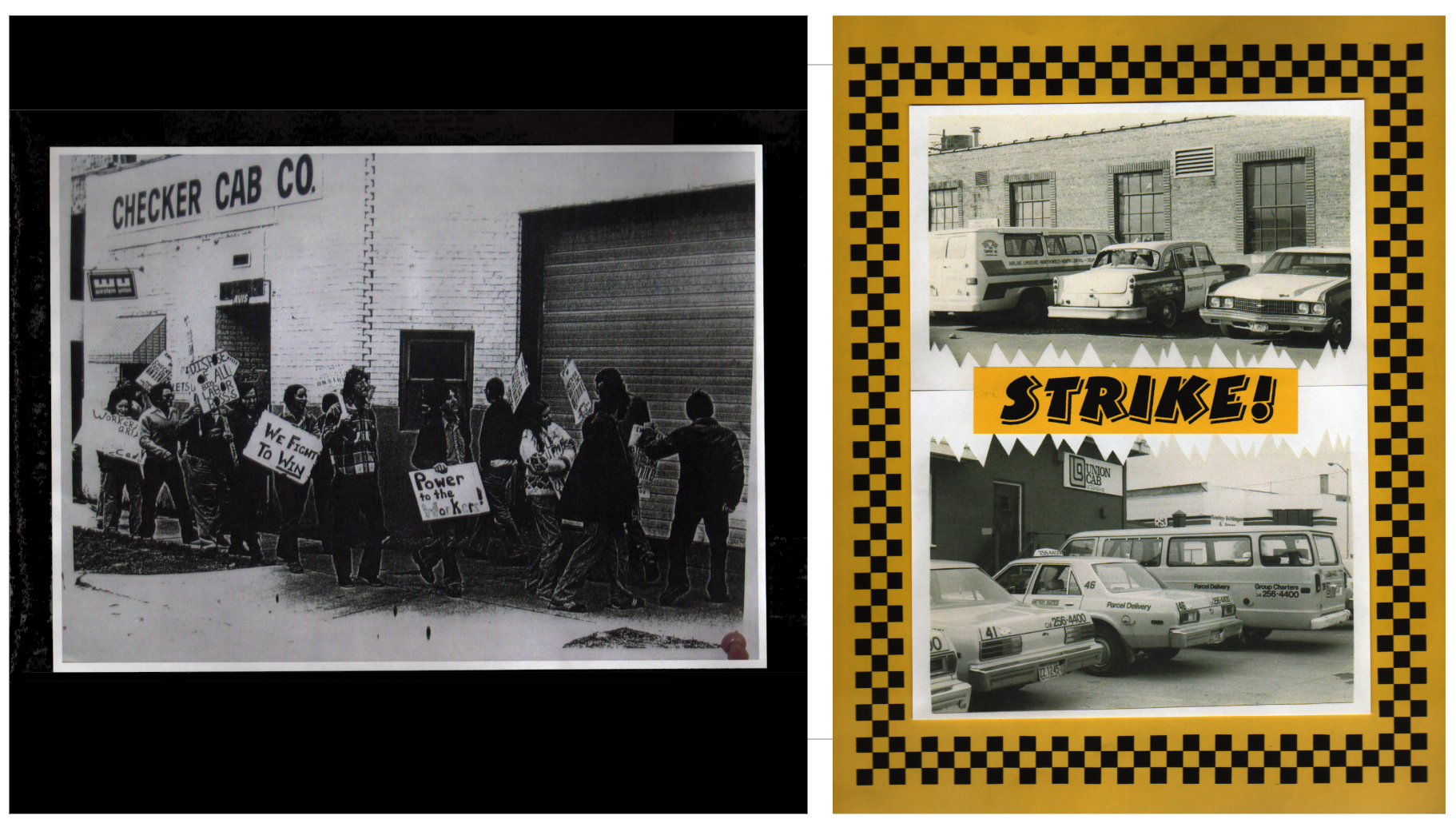
Photo collage from the Union Cab archives documenting the strikes at the Checker Cab company in Madison that led to the formation of Union Cab in 1973.
Union Cab of Madison Cooperative
Union Cab of Madison is a worker collective taxi company in Madison, Wisconsin. In 2023, as part of the Public Humanities Exchange Scholarship, I conducted oral histories with the Union Cab of Madison, documenting how taxi drivers fostered solidarity and community activism amidst the emergence of Uber. Workers described how the spirit of cooperation and worker democracy at the root of Union Cab’s history and culture have helped the cooperative continue to exist despite the disruptions created by platform companies.
—About & Contact—
I am a PhD candidate in Geography at the University of Wisconsin-Madison based in Madison, WI. My writing has appeared in cultural geographies, Antipode: A Radical Journal of Geography, and Frontiers: A Journal of Womens’ Studies. My work is supported by numerous awards and grants, including the Mellon/ACLS Dissertation Innovation Fellowship, UW-Madison University Fellowship, Morgridge Center Community Engaged Research Grant, and the Public Humanities Exchange Scholarship.